

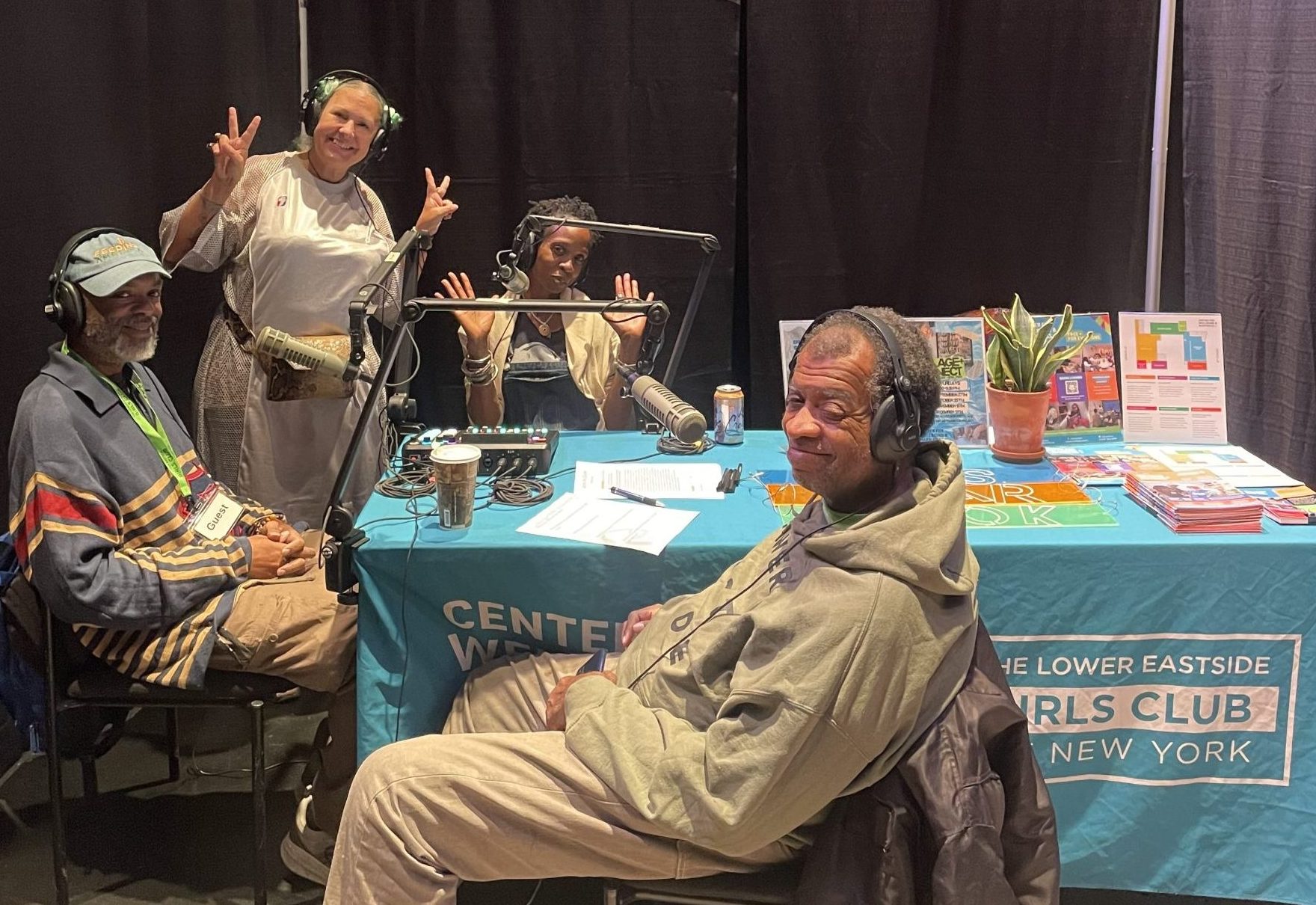
At the CWBH, we harness the power of storytelling and preserving the People’s history while our neighborhood is rapidly changing around us. As part of an ongoing collaboration with the LES Yearbook project, we were thrilled to attend the opening night of Destiny Mata’s LES Yearbook: A Living Archive at Abrons Art Center in Fall, 2025. Members of Liberation Lab, a community podcast presented by CWBH, recorded neighborhood stories to celebrate the people, memories, and spirit of the LES.

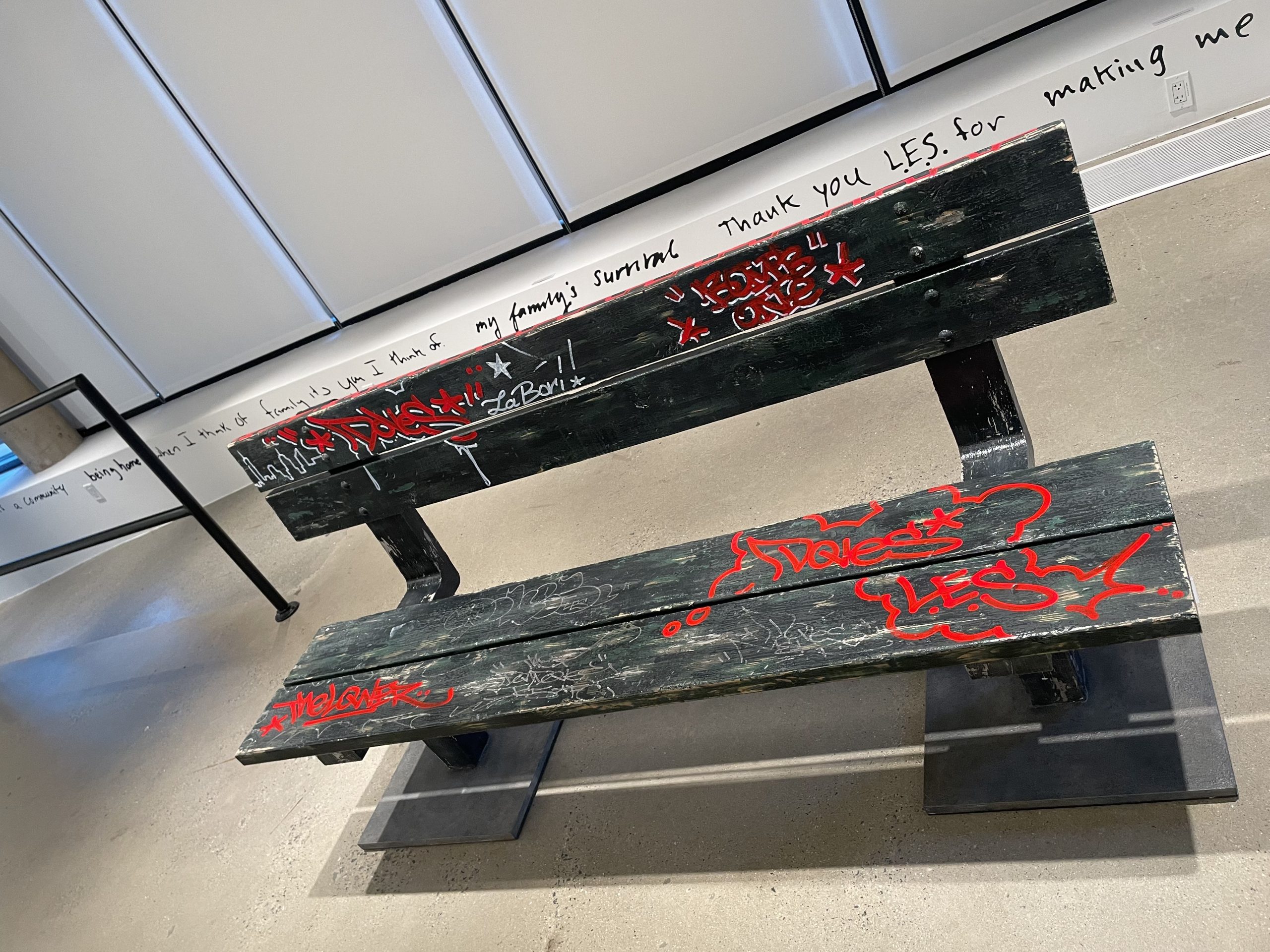 Walking through the gallery evoked a feeling of familiarity and nostalgia. This exhibit, as Destiny states, was not just centered around her vision and voice but that of many who make up the rich cultural fabric of the Lower East Side- particularly of public housing residents. Destiny’s own photos sit side by side with archival family photos of her neighbors, as if in direct conversation. Your eyes are drawn to images of NYCHA doors decorated for the holidays, complete with the highly recognizable real-life door and graffitied bench backed by an over-sized photo of a tattoo reading “LES – AVE D”. Curator Ali Rose Salas beautifully describes the show as- “a shared story about how architecture shapes the way we move, build relationships, and make memories. Hallways, outdoor benches, and brick exteriors appear again and again as extensions of home. This collective album is a testimony to a community’s love for itself and the connections that keep it strong.”
The energy was high that night – with a packed house, there was never a dull moment and the stories were interesting, heartwarming, and funny. Each recording became a living piece of the yearbook—a reminder of what makes a real neighborhood. Over the months, these audio memories joined artwork, photographs, and written reflections from community members. Together, they form a yearbook that captures not just what was here before, but what it has meant to the people who call it home and claim their block, LES Forever!
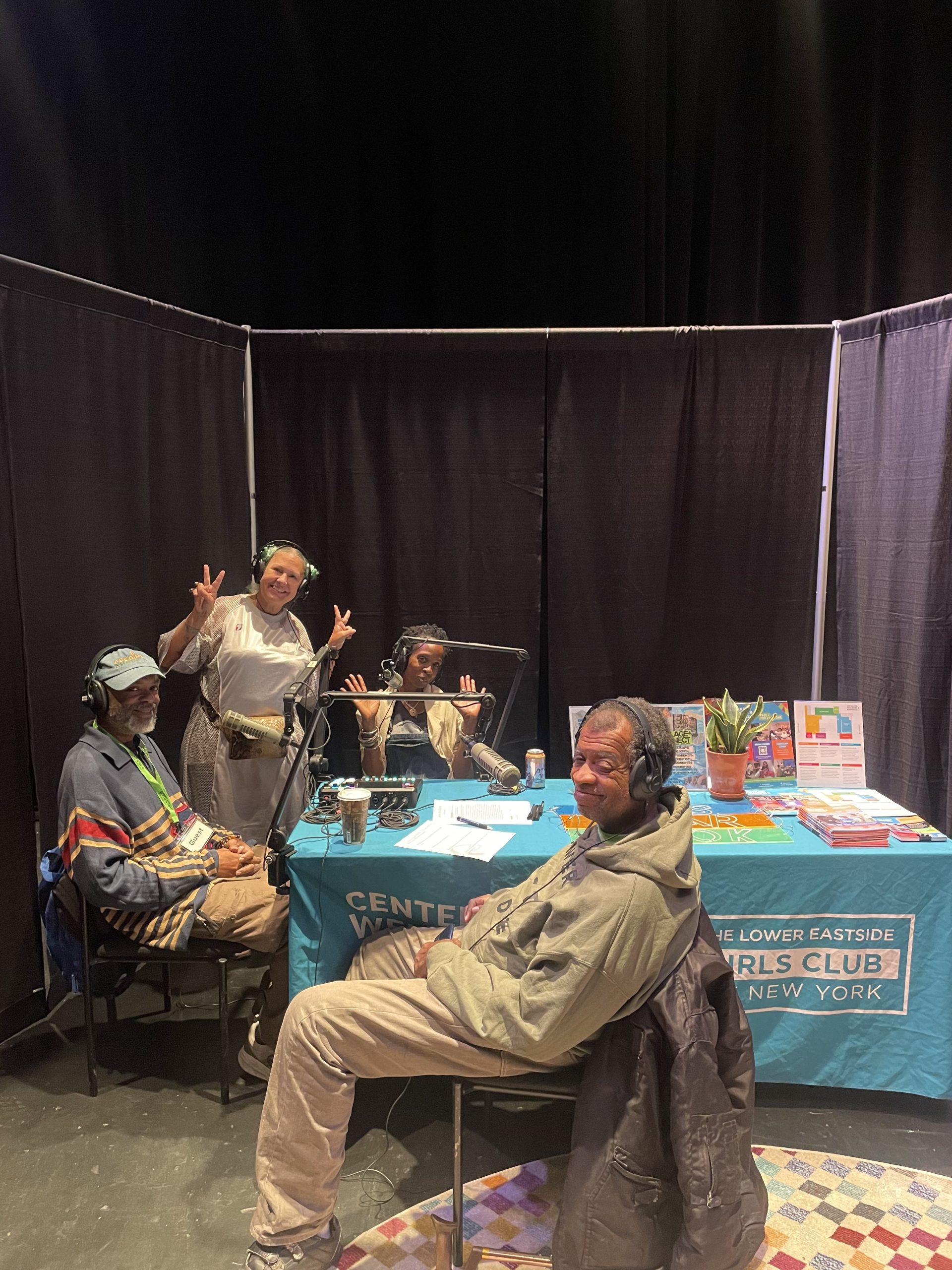
Check out our podcast episode right here: Podcast recording
Interviews by: Kelly Webb, David Brausell, Lisa Moody
Exhibition Credits:
Lower East Side Yearbook: A Living Archive brings together Destiny Mata’s photography and selections from the archives of Aicha Cherif, Promise Jimenez, Cheryl Kirwan, Camille Napoleon, and TC Rosario
Exhibition Curated by Ali Rosa Salas
Designed by Anzia Anderson
Produced and presented by Abrons Arts Center of the Henry Street Settlement
We are also proud to present this piece in honor of Latine History Month. Destiny Mata and the LES Yearbook committee represent the deep cultural ties of the Lower East Side, aka Loisaida, to waves of Latine immigrants.
You’re probably wondering, What does this month mean? Isn’t it Hispanic Heritage Month? What is the difference between Hispanic and Latine?
This month, September 15th to October 15th, became a federal observance in the 1980’s. Five countries became independent from Spain on September 15th, 1821 because of the Act of Independence of Central America. Other countries also became independent of Spanish rule in September such as: Mexico (September 16th), Chile (September 18th), and Belize (September 21st).
Hispanic refers to people who live within a Spanish-speaking country or of Spanish-speaking descent; this includes countries like Mexico, Venezuela, Guatemala, and even Spain. Hispanic, however, excludes places such as Brazil, Haiti, Saint Martin, Barthlélemy, Martinique, and French Guiana as these are not Spanish-speaking countries. Latino/Latina/Latine (you may sometimes even see Latinx, another gender neutral term) refers to people who live in Latin America – this would include the above excluded places, plus Central America, South America, and the Caribbean (Puerto Rico, Dominican Republic, Haiti, etc.), but exclude Spain.
How you may use it is certainly up to you, but something to keep in mind is that how the identity label is used depends on what is being emphasized and being aware of who we are including. Hispanic excludes the indigenous people of the land, Black descendants of enslaved people, and Asian Latines.


Comments are closed.